
 Readership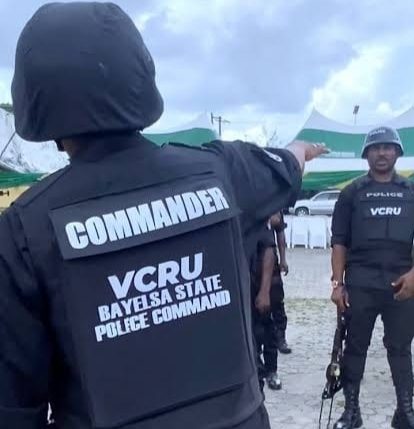
For nearly one month, a Bayelsa man lived through every husband’s worst nightmare, knowing that his wife, Sarah Ama, was alive but trapped somewhere deep in the creeks in the hands of kidnappers.
Sarah was abducted on July 28, 2026, and from that moment, her husband’s life became a painful cycle of anxiety, negotiations and desperate prayers for her safe return.
The kidnappers initially demanded ₦50 million, later reducing the ransom to ₦30 million. After prolonged negotiations, the demand was eventually reduced, and the husband first paid ₦300,000. The kidnappers subsequently demanded and collected another ₦1.5 million, bringing the total ransom paid to ₦1.8 million.
But instead of honouring their promise to release their victim after receiving the money, the criminals raised the stakes, demanding a further ₦3.5 million to finally release Sarah.
The kidnappers, driven by greed, demanded even more money.
“Do you think we will release your wife? My friend! Go and look for another ₦3.5 million.”
What they did not know was that their greed would eventually provide the police with an opportunity to rescue their victim.
While the kidnappers were busy in town enjoying the ₦1.5 million they had collected, they made a critical mistake: they left only one of their men behind to guard Sarah.
For the Violent Crime Response Unit (VCRU) of the Nigeria Police Force, that was an opportunity that could not be missed.
The VCRU, a brainchild of the Inspector-General of Police, IGP Olatunji Rilwan Disu, was established to tackle serious and violent crimes, including kidnapping, through intelligence-led and technology-driven policing.
In Bayelsa, the rescue operation was spearheaded by the VCRU Commander, CSP Chris Nwaogbo, but it was not a mission conceived overnight.
For days, Nwaogbo had been studying the terrain.
He personally conducted surveillance around the creeks several times using his boat, navigating the difficult waterways and gathering information about the area. Each trip brought the police closer to understanding where Sarah was being held and how the kidnappers were operating.
Then came August 22, 2026.
Armed with vital intelligence gathered from several sources, the VCRU Commander sought and obtained the approval of the Commissioner of Police, Bayelsa State Command, CP Adewale Ajao, to launch the operation.
This time, there would be no turning back.
Nwaogbo fuelled his gunboat to capacity.
In the dead of night, with the creeks cloaked in darkness, he set out with his team on the dangerous journey to the kidnappers’ hideout.
The operation demanded precision. One wrong move could alert the criminals and put Sarah’s life, as well as those of the rescuers, in danger.
Technology had already provided a crucial advantage. With the assistance of a police officer equipped with specialised tracking capabilities, investigators were able to trace a fresh telephone line used by the kidnappers after they changed numbers.
But technology alone was not enough.
Local intelligence was also deployed. A local fisherman familiar with the terrain was able to confirm that Sarah was still being held in the forest.
Piece by piece, the VCRU assembled the intelligence needed for the strike.
As Nwaogbo and his team moved through the creeks in the darkness, they knew exactly what they were going after.
When the team finally reached the hideout, the situation was almost unbelievable.
The majority of the kidnappers had left to spend the ransom money.
Only one remained behind.
He was arrested.
Inside the hideout was Sarah, blindfolded and having spent almost a month in captivity.
She was rescued.
The operation also led to the recovery of extended magazines, ammunition and live cartridges.
But the rescue came with another chilling revelation.
Sarah’s husband reportedly discovered that the suspect arrested was his own neighbour, a man who regularly visited his compound to fetch water from a borehole the husband had personally dug to serve the community.
The man had been close enough to home to appear ordinary, while being connected to the nightmare that had kept the husband awake for weeks.
For him, Sarah’s rescue was more than a police victory.
It was the end of nearly a month of fear, uncertainty and emotional torture.
For the VCRU, the operation demonstrated the power of intelligence-led policing, combining surveillance, technology, local intelligence, operational planning and courage to penetrate one of the most difficult terrains in the country.
The kidnappers thought the ₦1.5 million ransom was another payday.
Their greed, however, made them careless.
While they went away to enjoy their loot, the VCRU was coming for the woman they had left behind.
And in the early hours of August 22, after weeks of surveillance and painstaking intelligence gathering, Sarah Chinedu Ama finally walked out of the forest alive.
For a husband who had spent almost a month praying for that moment, the darkness of the creeks had finally given way to the light of a long-awaited reunion.