
 Readership
Nobel Laureate, Professor Wole Soyinka, has urged the Public Complaints Commission (PCC) to address the persistent failure of government agencies to comply with court judgments, describing the situation as a major challenge to justice delivery in Nigeria.
Soyinka said he would die a happy man if the commission could find a lasting solution to the problem, lamenting that some Nigerians die without benefiting from judgments secured after years of legal battles.
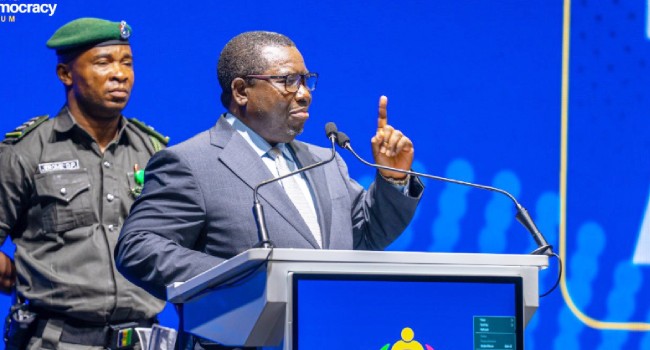
The renowned author spoke while delivering a goodwill message at the inaugural Nigerian Ombudsman Annual Conference organised by the PCC in Abuja on Thursday.
“If you can solve that for me, believe me, I will die happy,” Soyinka said, highlighting the gap between the delivery of justice and the enforcement of court decisions.
He questioned why judgments delivered by competent courts were sometimes ignored, particularly by government institutions expected to uphold the rule of law.
“Why is it that we cannot guarantee the implementation of the declaration of a judgment between the plaintiff, between the judgment itself, between the judges, the structure of justice and the victim?” he asked.
The Nobel Laureate also expressed concern that citizens who pursued justice through the courts often waited for years without seeing the outcomes of their legal struggles implemented.
“Why is it that people we know have actually died without seeing the fruits of their endeavours for justice?” he queried.
Soyinka cited cases in which Nigerians had waited for extended periods for government agencies to comply with court orders, including directives requiring the return of confiscated passports.
He described the delays as “medicine after death”, stressing that justice loses much of its value when successful litigants cannot enjoy the benefits of favourable judgments within their lifetimes.
The writer challenged the Public Complaints Commission to make addressing the non-compliance with court decisions a major priority, urging the ombudsman institution to help bridge the gap between judicial pronouncements and their implementation.
He maintained that resolving the problem would strengthen public confidence in Nigeria’s justice system and ensure that citizens who approach the courts for redress are not denied the benefits of their legal victories.
Soyinka’s remarks placed renewed attention on the enforcement of court judgments and the need for public institutions to respect judicial decisions as a fundamental requirement of the rule of law.