The Leadership We Ordered, The Hardship We Got
About The Author


By Shaba Gbenga
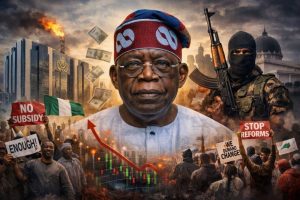
Nigerians voted with memory and hope. Many believed they were choosing a familiar progressive tradition, one that once put schools before slogans and welfare before excuses. Bola Tinubu was marketed as heir to Awolowo’s social vision, Buhari’s populist instincts, and the old Southwest idea that government must first protect the poor. That was the expectation. That was the order placed at the ballot box. What has been delivered feels like a bait and switch, where ideology ended at campaign posters and governance began and ended with elite comfort.
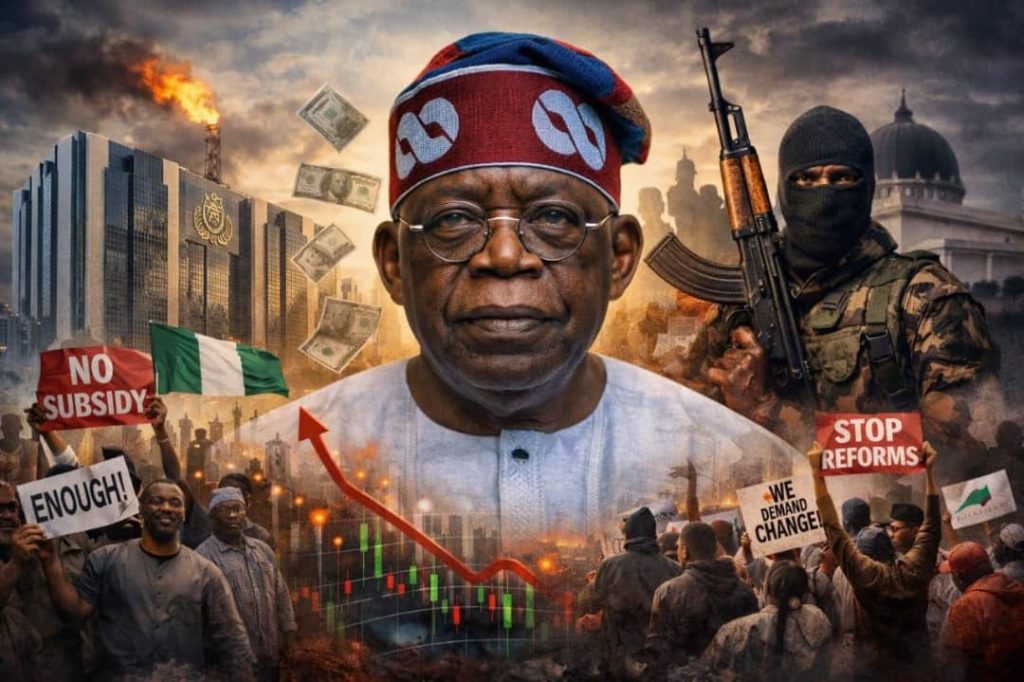
Today, Nigeria is officially one of the most inflation-battered countries in the world. Headline inflation has climbed beyond thirty percent, while food inflation has crossed forty percent, turning basic meals into luxury items. A bag of rice that sold for under thirty thousand naira a few years ago now sells for over fifty thousand naira in many states. Garri, bread, beans, tomatoes, cooking gas, transport fares, and school fees are all rising at once. Meanwhile, the national minimum wage of seventy thousand naira remains a cruel joke, barely enough to cover transportation expenses for a month, let alone rent or food. This is not abstract economics. This is daily survival becoming mathematically impossible.
The pain is not evenly distributed. In states like Kano, Katsina, Zamfara and Niger, food insecurity has deepened as insecurity and inflation collide. In the South East, transport costs and a collapsing informal economy have wiped out small traders. In Rivers and Bayelsa, fuel costs and inflation are strangling artisans and fisherfolk. And in Lagos, the so called economic capital, life has become a pressure cooker. Rents have exploded. Transport costs have doubled. Streets are dirtier than ever, refuse piling up, drainage clogged, public hygiene visibly deteriorating. If a serious cholera outbreak hits Lagos today, the consequences would be catastrophic, not because Nigerians are careless, but because governance has failed to prioritize public health and urban welfare.
What makes the situation more infuriating is not just the hardship, but the indifference. Government officials speak in graphs while citizens speak in hunger. Policy announcements come without cushioning, without sequencing, without empathy. Subsidy was removed overnight, tariffs adjusted upward, taxes expanded, yet social protection remains weak, patchy, and in many cases invisible. A government that claims progressivism but pushes shock policies without safety nets is not reforming. It is outsourcing suffering to the poor.
This is why the street verdict has been brutal. Renewed hope has translated into renewed shege for millions. Not because Nigerians hate reform, but because reform has been designed to punish those with the least while protecting those with the most. Convoys are longer. Government budgets are bigger. Foreign trips continue. But the average Nigerian is told to endure in silence. That is not leadership. That is emotional distance dressed up as economic courage.
History will remember this moment clearly. Nigerians did not reject progressivism. They were betrayed by a hollow version of it. Awolowo built welfare before wealth. Today’s leadership is chasing macroeconomic applause while microeconomic misery spreads unchecked. A government that cannot feel the pain of its people will eventually lose their trust, and trust once broken is hard to rebuild.
The way forward begins with citizens, not messiahs. Nigerians must resist political hopelessness, register and collect their voters cards, organize locally, ask harder questions, and refuse to worship political brands. Welfare focused leadership will not fall from the sky. It will be demanded at the ballot box and enforced by civic pressure. The leadership Nigerians ordered is still possible, but only if the people insist on it, vote for it, and defend it. Otherwise, renewed shege will keep renewing itself, election after election.
Shaba Gbenga is a seasoned public relations expert and media consultant with over two decades of experience. He is the publisher of Omonaijablog.