
 Readership
Though critics have tried in vain to pick holes, it’s evident that the sustained developments witnessed in Lagos in the last over twenty years can be directly linked to the continuum of leadership initiated by Tinubu in 1999.
While many states in the region which have been administered by leaders across different parties in the fourth republic have sad tales to tell of policy somersaults and reversals, with successive leaders trying to outshine and undo their predecessors and their projects, Lagos has thrived better and faster due to the consistent leadership path charted by Tinubu and followed by his successors.
In 1999, Bola Tinubu rode on the crest of the Alliance of Democracy, AD, to become the democratically elected Governor of Lagos State.
This was following his years of significant financial and intellectual contributions to pro democracy struggle in Nigeria through the NADECO group.
His emergence however changed the narrative of the State as it metamorphosed into a commercial hub of the nation and infact one of the largest on the continent.
His tenure also saw the state pioneer vital development areas in the nation, including power generation, sustainable revenue generation, and free trade zone.
The achievements of former Lagos State Governor, Asiwaju Bola Ahmed Tinubu recorded between 1999 and 2007 underscored the power of diligent planning and execution.
It also goes beyond the administration into the famed 24-Year Socio-economic and Political Development Plan Continuum that has seen Lagos attain the status of a Mega City.
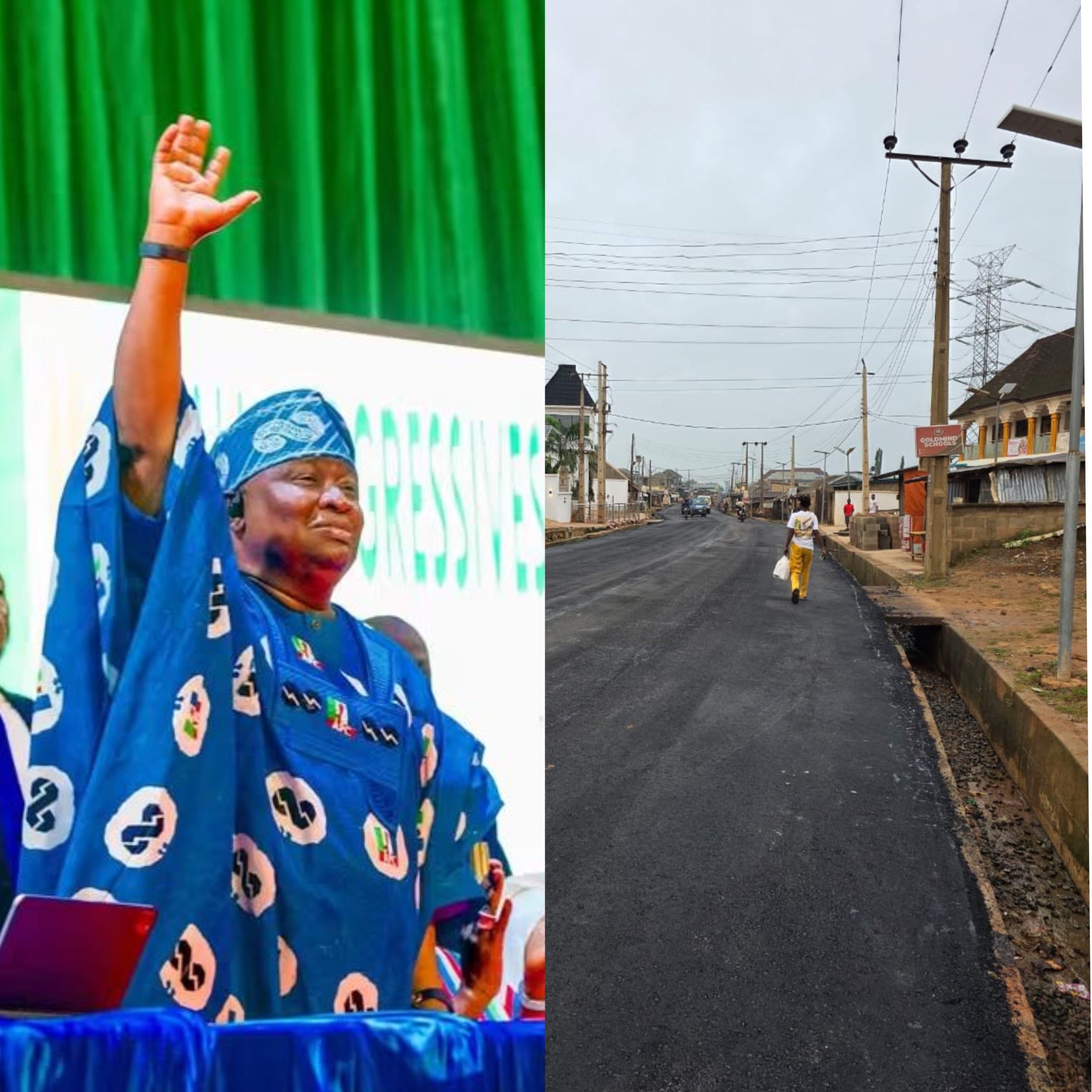
It’s imperative to note that Tinubu inherited a State that was on its knees, although with great potentials. Lagos roads were an eyesore. According to records, in five years, Tinubu had awarded contracts for 422 road projects, and 308 were completed. His Works and Infrastructure Commissioner, Chief Rauf Aregbesola, later governor of Osun State, was up and doing.
The Lagos blueprint also attested to Tinubu’s power of foresight and the import of team work. Lagos has remained a model state, not only in Nigeria, but in West Africa and Africa as a whole because it has evolved a standard that cannot permit deviations by successors.
In the successive cabinet of talents are seasoned technocrats who cannot afford to play politics with the development of the state, and the most important factor in success is the judicious allocation of resources.
When Tinubu saw the handwriting on the wall that the Party that brought him into power didn’t share his vision, he backed out of the Party and created his political enclave and party, Action Congress, AC.
He however got re-elected on the platform of his Party that came from obscurity to prominence and further strengthened the structure and changed the fortunes of the State known as the Centre of Excellence for the betterment of all.
With successive administrations grew the economic fortunes of the State which thrived to the pleasant surprise of many that despite the failure of the then President Olusegun Obasanjo to release Federal Allocation for the State from 2003-2006, he judiciously handled resources and ballooned its IGR.
During the electioneering campaign in 2007 to usher in another Governor, Tinubu brought on board, his former chief of staff, Babatunde Raji Fashola as his successor.
Fashola won the election and continued working with the blueprint of Tinubu to sustain the development plan of the state.
Fashola maintained the legacies of Tinubu, improved on it, and made Lagos the cynosure of all eyes.
After his eight years in the saddle following the blueprint of Tinubu, Fashola handed over to Governor Akinwunmi Ambode, who also leveraged on the legacies of his predecessors and worked fervently towards the actualization of a mega city.
Four years down the line, Governor Babajide Olusola Sanwo Olu has done remarkably well in sustaining the twenty four years dominance of the Tinubu’s legacy and growing the economy fortunes of the State.