Nigerian Football Icon Festus Onigbinde Passes Away At 88

About The Author


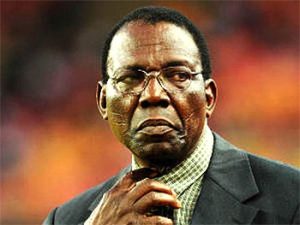
Nigeria’s football community is mourning the death of veteran tactician and administrator, Festus Onigbinde, a former head coach of the national football team, who passed away at the age of 88.
Onigbinde reportedly died on Monday, March 9, 2026, just four days after celebrating his 88th birthday. His death was confirmed in a statement issued by his family and signed by Bolade Adesuyi, who described the late coach as a distinguished Nigerian whose contributions to football and national development will remain unforgettable.
The family expressed gratitude to God for what they described as a fulfilled and impactful life.
“With great gratitude to God for a life well spent, we announce the passing of this great man, a Modakeke High Chief and the first indigenous Nigerian coach of the Super Eagles,” the statement read, adding that funeral arrangements would be announced in due course.
Born on March 5, 1938, in Modakeke, Osun State, Onigbinde built a reputation over several decades as one of Nigeria’s most respected football coaches and administrators. Known in football circles as “The Teacher” and sometimes referred to by journalists as the “Sweat Merchant,” he was widely admired for his tactical discipline and commitment to developing indigenous coaches.
Onigbinde had two notable stints as head coach of Nigeria’s national team. His first tenure was between 1982 and 1984, when the team was still known as the Green Eagles. During that period, he guided Nigeria to the final of the 1984 African Cup of Nations in Côte d’Ivoire, where the team finished runners-up after losing 3–1 to Cameroon.
Nearly two decades later, he returned to lead the national team in 2002, replacing the coaching crew led by Shuaibu Amodu following Nigeria’s disappointing outing at the Africa Cup of Nations earlier that year.
He subsequently led Nigeria to the 2002 FIFA World Cup co-hosted by Japan and South Korea, becoming the first indigenous Nigerian coach to manage the Super Eagles at the global tournament. At the competition, Nigeria lost 1–0 to Argentina, 2–1 to Sweden, and drew 0–0 with England, exiting the tournament at the group stage.
Beyond his contributions to the national team, Onigbinde also enjoyed a successful career at club level. He notably guided Shooting Stars Sports Club of Ibadan to the final of the 1984 African Club Champions Cup, where the Nigerian side lost to Egypt’s Zamalek.
In addition to his coaching achievements, Onigbinde served as a technical instructor for both the Confederation of African Football (CAF) and FIFA, helping to train coaches and promote football development programmes across Africa and other parts of the world.
Outside football, he also served as a football adviser to the Osun State Government and remained an influential voice in Nigerian sports administration.
Many observers believe Onigbinde’s greatest legacy lies in his strong advocacy for indigenous coaching and youth development, as he consistently pushed for opportunities for locally trained Nigerian coaches to lead national teams.
His passing marks the end of an era in Nigerian football, as tributes continue to pour in from former players, sports administrators and fans who remember him as a pioneer, mentor and patriotic servant of the game.
Funeral arrangements for the late football icon are expected to be announced by his family in the coming days.