
 Readership
Airtel ODU vs MTN ODU: As Internet Becomes Nigerians’ Lifeline, Glo Risks Falling Behind
By Lateef Owodunni | Readership NG
Internet access is no longer a luxury for the average Nigerian. For the freelancer working from home, the online vendor taking orders, the content creator uploading videos, the student attending virtual classes and the professional joining international meetings, reliable internet can determine whether a job gets done or an opportunity is lost. Yet, as Nigerians increasingly depend on connectivity to work and earn, Glo appears increasingly out of step with the standard now being set by consumers who depend on the internet every day.
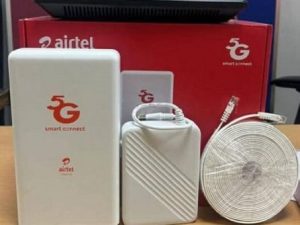
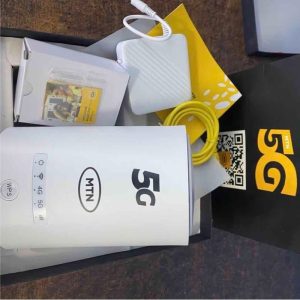
The market itself is changing rapidly. MTN and Airtel are pushing Outdoor Unit solutions that bring 5G fixed wireless broadband into homes and offices, giving customers an alternative where fibre is unavailable. MTN’s FlyX ODU, for instance, is being positioned as a 5G broadband solution with advertised speeds of up to 100Mbps, while Airtel’s SmartConnect ODU similarly targets customers seeking high speed internet without waiting for fibre infrastructure.
Glo is not without an unlimited router offering, but this is where the concern begins. Its router proposition remains largely associated with 4G connectivity, while its competitors are increasingly moving customers towards 5G based fixed wireless broadband. For a Nigerian whose livelihood depends on uploading large files, attending video conferences, running cloud applications or connecting several devices at once, the question is no longer simply whether a network provides data, but whether the router can consistently deliver the speed and capacity required.
The difference becomes more obvious when heavy usage is considered. Glo’s unlimited router plans are subject to Fair Usage Policy conditions, meaning customers can experience reduced speeds after specified usage thresholds. That may be tolerable for light browsing, but it becomes a serious concern for people whose internet connection is effectively their workplace. A connection that becomes severely restricted after heavy usage may save money initially but cost the user valuable working hours.
This is why the current ODU race between MTN and Airtel deserves attention. These devices are designed to sit outside the building and capture network signals before distributing the connection indoors, offering a different approach to home and office broadband. The competition is therefore no longer simply about who sells a router or offers more data, but who can provide an internet connection capable of keeping up with modern digital demands.
Readership NG’s review of publicly available customer experiences also shows that the ODU story is not perfect. Some users have complained about Airtel ODU speeds and service issues, while others have reported considerably higher speeds under favourable conditions. Similar variations have been reported by users of MTN broadband products. These experiences are not scientific nationwide tests, but they underline an important reality: internet performance depends heavily on location, coverage, congestion, equipment positioning and other local conditions.
That location factor matters across Nigeria. A router that performs well in Lagos may produce a completely different experience in Ogun, Oyo, Abuja, Enugu or Katsina. For Nigerians, however, the questions remain straightforward: how much is being paid, what speed is being received, how reliable is the connection and can the router handle the work required of it? These are the issues that determine whether an internet service is genuinely useful to the customer.
There is also the question of affordability. Glo has a clear attraction for many Nigerians because cheaper data matters in an economy where households and businesses are watching every naira. But the internet user is increasingly asking a second question: what is the value of cheaper data if the connection becomes difficult to rely on when it matters most? For somebody working online, a slow upload, interrupted meeting or failed connection can have a financial cost far greater than the money saved on a cheaper subscription.
Glo deserves credit for continuing to invest in its network and for maintaining broadband options that cater to customers who cannot afford premium services. It also has fibre broadband in parts of the country. But the bigger issue is whether these investments are translating into the everyday internet experience Nigerians now expect. The standard has changed. The average user is no longer buying a router simply to browse social media. The same connection may now be expected to power laptops, smartphones, smart televisions, online businesses, virtual meetings and other connected devices in the same household.
For Nigerians, the internet has become part of the economy of survival. A freelancer cannot tell an overseas client that poor network caused a missed deadline. A small business cannot afford to lose online orders because its connection keeps dropping. A content creator cannot build a career efficiently if uploading a large video becomes an all day struggle. The standard has therefore changed, and Glo must recognise that what may have been acceptable for the average customer years ago may no longer satisfy today’s internet dependent Nigerian.
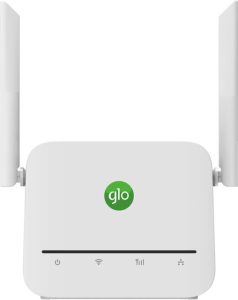
The question confronting Globacom is no longer whether it has data plans or an unlimited router. It is whether its broadband offering is keeping pace with the expectations of Nigerians who now depend on the internet to work, trade, learn and earn. MTN and Airtel are pushing 5G ODU broadband, while Glo continues to compete strongly on affordability and its existing broadband options. For Glo, the message from Nigeria’s increasingly internet dependent population is becoming difficult to ignore: cheaper data means little when the connection cannot keep pace with the work Nigerians need it to do.
About The Author