
 Readership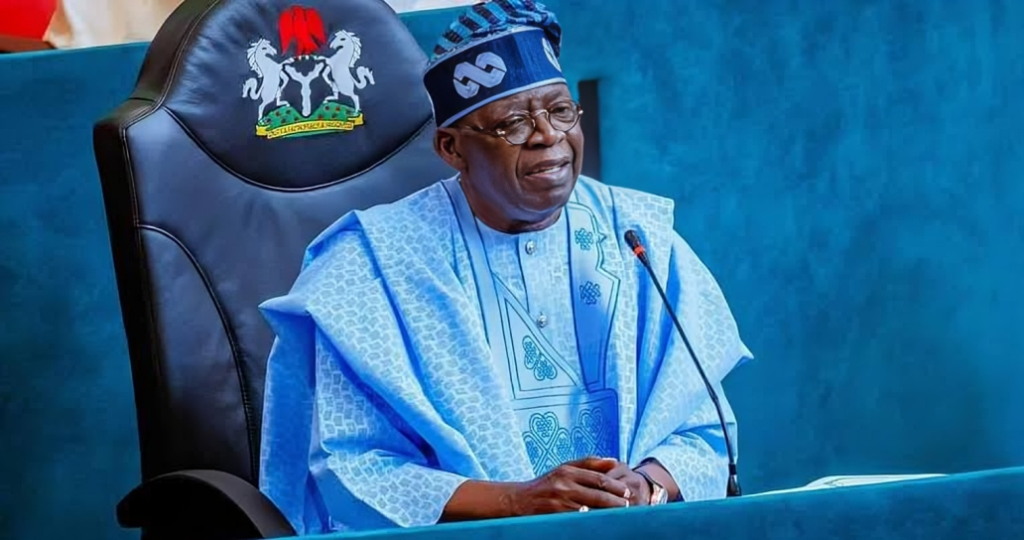
A founding member of the All Progressives Congress (APC), Osita Okechukwu, has admitted that President Bola Tinubu’s economic reforms have yet to improve the living conditions of ordinary Nigerians.
Okechukwu made this known during an interview on Arise Television’s Prime Time on Tuesday, acknowledging that although the reforms had performed better at the macroeconomic level, their impact on citizens remained limited.
The APC chieftain identified the high cost of living, declining purchasing power and widespread unemployment as major challenges confronting Nigerians despite the country’s large youth population.
According to him, the depreciation of the naira has made it increasingly difficult for small and medium-sized enterprises to import machinery, while rising energy costs continue to undermine industrial growth.
“The economic reforms have done well at the macroeconomic level, but microeconomic indicators are very poor,” Okechukwu said.
“When we talk about the purchasing power of the citizenry, the high cost of living and joblessness, the president’s economic reform programme has not helped.”
He argued that the reforms had not delivered the anticipated growth in the private sector, noting that several economic factors continued to constrain businesses.
Okechukwu explained that the assumption behind the neoliberal economic approach was that market-oriented reforms would stimulate private sector growth. However, he said existing challenges had continued to hamper the performance of small and medium-scale industries.
“It didn’t help because the assumption in the neoliberal doctrine is that it will propel the private sector. However, there are indicators inhibiting that growth. Small-scale and medium-scale industries are performing poorly,” he said.
He added that the floating of the naira had increased the difficulty of importing machinery, while rising energy costs had further compounded the challenges facing businesses.
“When you float the naira, it becomes difficult for them to import machinery, and rising energy costs make it even more difficult. These are tangential to the reform programme,” he said.
Meanwhile, the Democratic Leadership Alliance (DLA) candidate for Ilaje/Ese-Odo Federal Constituency, Taiwo Ilawole, has expressed support for Tinubu’s economic reforms, urging the Federal Government to ensure that their benefits reach coastal communities in Ondo State.
Ilawole stated this while outlining his priorities ahead of the 2027 general elections, identifying the sea-incursion crisis in Aiyetoro, unemployment and inadequate infrastructure as major challenges facing the constituency.
Although he acknowledged the economic hardship confronting Nigerians, he maintained that the reforms should translate into employment opportunities, improved livelihoods and better public services.
“We will work with President Tinubu to ensure that the gains of the reforms reach our people. We must also make sure federal programmes and opportunities are accessible to students, young people and coastal communities,” he said.
Ilawole identified the Nigerian Education Loan Fund (NELFUND), Petroleum Technology Development Fund scholarships and Niger Delta Development Commission postgraduate scholarships as opportunities residents should be encouraged to access.
On the sea-incursion crisis threatening Aiyetoro in Ilaje Local Government Area, the DLA candidate pledged to press the Federal Government and relevant agencies to implement a lasting solution.
He said such intervention should protect homes and livelihoods while supporting the restoration of fishing and commercial activities in the community.
Ilawole also called for increased investment in Ese-Odo, arguing that the area’s economic potential could create jobs and expand business opportunities.
He said he would seek to connect investors with viable projects and advocate the provision of infrastructure needed to support economic activities.
The candidate criticised the constituency empowerment approach of the incumbent lawmaker, Donald Ojogo, arguing that the distribution of ₦50,000 and bags of rice offered only temporary relief to constituents.
“Cash and food assistance may offer temporary relief, but they are not a substitute for meaningful empowerment. Our people need support that builds skills, creates livelihoods, strengthens small businesses and helps families become self-reliant,” he said.
He proposed vocational training, support for small businesses and access to productive equipment as alternatives to one-off cash and food distributions.
Ilawole also questioned the impact of constituency projects on public services, alleging that schools and healthcare facilities across Ilaje and Ese-Odo still required significant improvements despite billions of naira in Zonal Intervention Project allocations.
He further accused Ojogo of failing to facilitate tangible road construction projects in the constituency, insisting that residents needed improved infrastructure and public services capable of addressing their everyday challenges.