

 Readership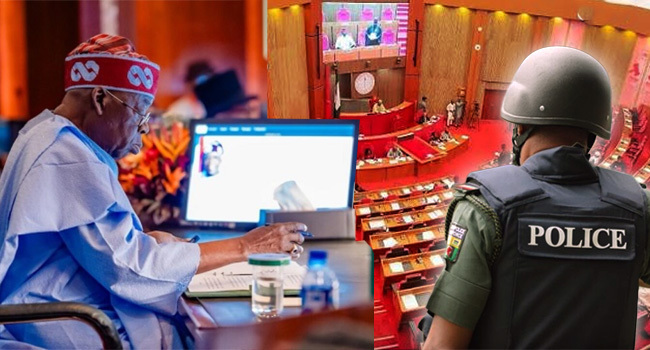
President Bola Tinubu has transmitted a constitution alteration bill to the Senate seeking the establishment of state police as part of efforts to reform Nigeria’s security architecture.
According to the president, the bill is designed to provide a legal framework for a dual policing structure in Nigeria, allowing states to establish and operate their own police services alongside the federal police.
He said the proposed amendment is a critical component of ongoing efforts to reorganise the country’s policing system to enhance security and better protect citizens. He noted that communities, municipalities, and local government areas would play more active roles in policing responsibilities under the new arrangement.
Following the presentation, Akpabio referred the bill to the Senate committee on constitutional review with a directive to report back on Wednesday.
He underscored the importance of community-based security, arguing that local authorities would be better positioned to identify suspicious activities and alert security agencies promptly.
“You will know when foreigners infiltrate Nigeria and alert security agencies so they can react proactively rather than reactively,” the lawmaker said, expressing confidence that collaboration between the executive and legislative arms would ensure the success of the initiative.
Speaking further on the proposed legislation, Akpabio explained that the implementation process would be carried out in phases through constitutional alteration and subsequent Acts of Parliament.
The Senate president also informed senators that plenary proceedings would not entertain other major discussions due to the death of House member Yahaya Tongo from Gombe State.
Meanwhile, the Senate leader also appealed to lawmakers to attend the next sitting, underpinning the significance of the state police proposal.
“We need a minimum of two-thirds of members to vote on constitutional alterations. The issue of state police is non-partisan and cuts across geopolitical zones and interests,” he said.