
 Readership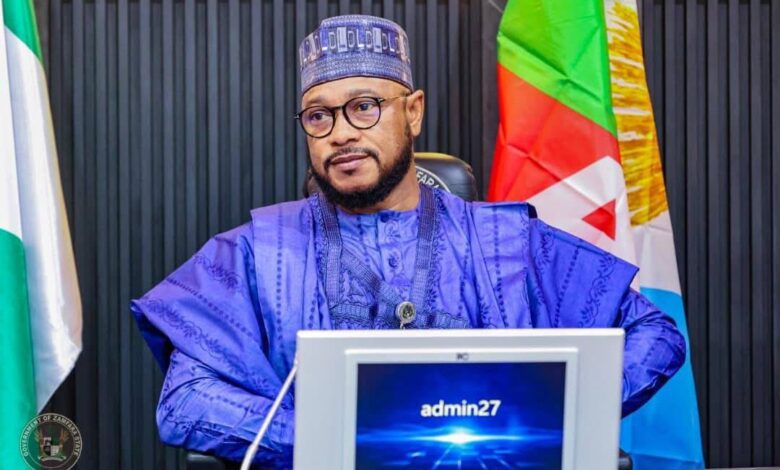
Governor Dauda Lawal has approved a 120-day Rapid Intervention Action Plan to tackle deep-rooted challenges in Zamfara State’s education sector.
The decision was taken at the 65th State Executive Council meeting held on Monday at the Government House in Gusau, where the governor presided over deliberations on key sectors including education, health, and infrastructure.
The Council endorsed the intervention plan following extensive diagnostic assessments conducted by the Ministry of Education and the Education Quality Assurance Agency (EQAA). Presented by the overseeing Commissioner for Education, Abdulmalik Abubakar Gajam, the plan outlines urgent, time-bound reforms aimed at addressing systemic gaps across the sector.
Key components of the initiative include comprehensive payroll audits, school mapping exercises, and detailed infrastructure assessments. The plan also prioritises reforms in governance, digital transformation, teacher capacity development, and student welfare.
As part of efforts to improve school safety, the Council approved the establishment of a joint committee to identify and assess illegal or unapproved structures located around schools. The committee, to be led by the Ministry of Education, Science and Technology (MOEST), will work towards relocating such structures and ensuring secure learning environments.
In a move to strengthen policy coordination, the Council also gave approval for the development of a unified Education Sector Bill. The proposed legislation will cover all levels of education—from Early Childhood Care Development Education to tertiary institutions—and will be drafted in consultation with key stakeholders, including government agencies, civil society organisations, traditional institutions, and development partners. The bill is expected to be presented to the State House of Assembly within the emergency intervention timeframe.
Additionally, the Council approved the redeployment of non-teaching staff currently on the Ministry of Education’s payroll. Affected workers—including messengers, gardeners, cooks, drivers, guards, and artisans—will be transferred to relevant ministries, departments and agencies or outsourced to private firms.
The Council further approved the composition of the Zamfara State Steering Committee on the State of Emergency on Education. The committee has been empowered to set up a Technical Working Group (TWG) and engage stakeholders such as the Nigeria Union of Teachers (NUT), UNICEF, UBEC, traditional and religious leaders, private school proprietors, and civil society organisations to support the reform process.
The intervention plan is expected to fast-track improvements in the state’s education system and lay the foundation for long-term transformation.