
 Readership
First HoldCo Plc, the parent company of Nigeria’s oldest bank, First Bank of Nigeria Limited, is facing intense scrutiny from customers, investors, and analysts after reporting a 93 percent collapse in profit after tax for the 2025 financial year, following a record N748 billion impairment charge taken to clean up legacy bad loans.
The impairment, disclosed in the group’s unaudited 2025 financial statements, pushed profit after tax down sharply despite what management described as one of the bank’s strongest years for core revenue generation. The development has sparked a wide debate in the financial market over whether the move represents a bold reset or an exposure of deep rooted structural weaknesses.
Readership NG reports that First HoldCo reported a profit before tax of N229.097 billion in 2025, down 71.18 percent from N796.461 billion in 2024. The sharp earnings decline came despite gross earnings rising to N3.4 trillion, net interest income surging by 36.3 percent to N1.9 trillion, and fees and commission income growing by 18.7 percent to N290.7 billion, largely driven by digital banking and electronic transaction fees.
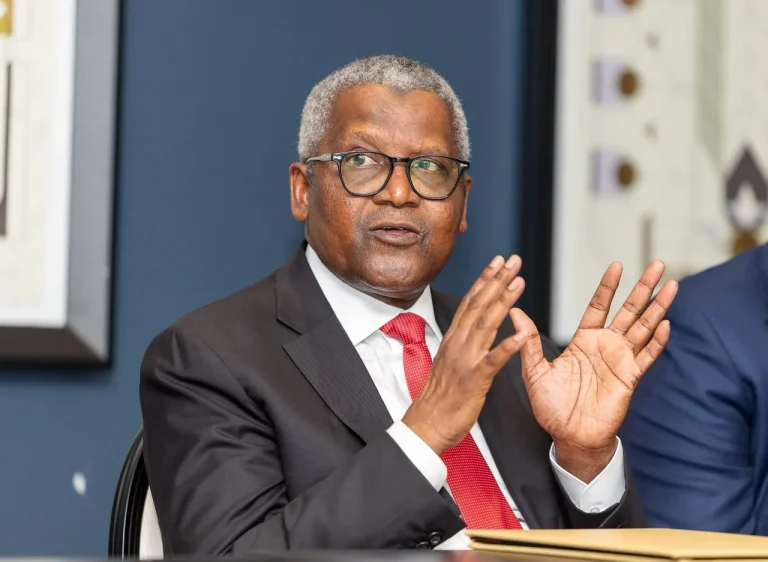
Defending the results, First HoldCo Chairman, Mr Femi Otedola, said the profit slump was the consequence of a deliberate balance sheet cleanup rather than weak operating performance. In a statement shared on his official X page, Otedola described the N748 billion write off as a necessary and painful decision.
“We decided to clean house properly. We took a huge one time hit to admit old bad loans instead of pretending they do not exist. That is why profit looks like it crashed by 92 percent. Painful headline, but it is a serious long term move,” he said.
Industry analysts point to regulatory pressure as the key trigger. In June 2025, the Central Bank of Nigeria formally ended regulatory forbearance introduced during the COVID 19 period, which had allowed banks to restructure distressed loans without classifying them as impaired. According to Mr Ayokunle Olubunmi, Head of Financial Institution Ratings at Augusto and Co, the apex bank’s current stance is forcing lenders to confront toxic assets ahead of ongoing recapitalisation efforts.
“The CBN’s body language is clear. Banks are being pushed to expose legacy issues now so they can enter the capital raise era with clean books. Any amount recovered from these loans will now flow directly into profit,” Olubunmi said.
Despite management’s assurances, concerns persist regarding earnings quality. Financial experts noted that the scale of the impairment exposes long-standing credit weaknesses. ‘A bank generating nearly N3 trillion in interest income but retaining less than N45 billion in profit after tax reflects weak profit conversion and prolonged credit stress,’ one expert remarked. Economist Dr. Marcel Okeke added that the size of the write-off mirrors broader economic strain, arguing that many Nigerian businesses are struggling to service obligations amid inflation, currency pressure, and slowing growth.
Shareholder sentiment has also been affected. Shareholder activist Mr Boniface Okezie questioned the implications of writing off an amount approaching one trillion naira, noting that it exceeds the N500 billion capital requirement set for banks with international licences.
“The public needs assurance that writing off this amount does not mean the money is gone forever. Investors want clarity on recovery prospects,” Okezie said.
Market reaction has remained cautious. First HoldCo shares closed at N45 on January 30, 2026, extending the company’s year to date loss to 6.05 percent. Analysts warn that dividend expectations for 2026 may be muted, as banks undergoing regulatory transitions and capital strengthening are often constrained from major capital outflows.
As First Bank enters 2026, management insists the institution is lighter, cleaner, and better positioned for sustainable growth. However, analysts say the real test lies ahead. Attention is now shifting to how quickly the bank can recover value from the impaired assets, strengthen credit discipline, and translate its strong revenue base into consistent profits. Until then, customers and investors remain watchful, weighing reassurance against the hard lessons revealed by the 2025 numbers.